North
Kemet
The black land: permanence against the thaw
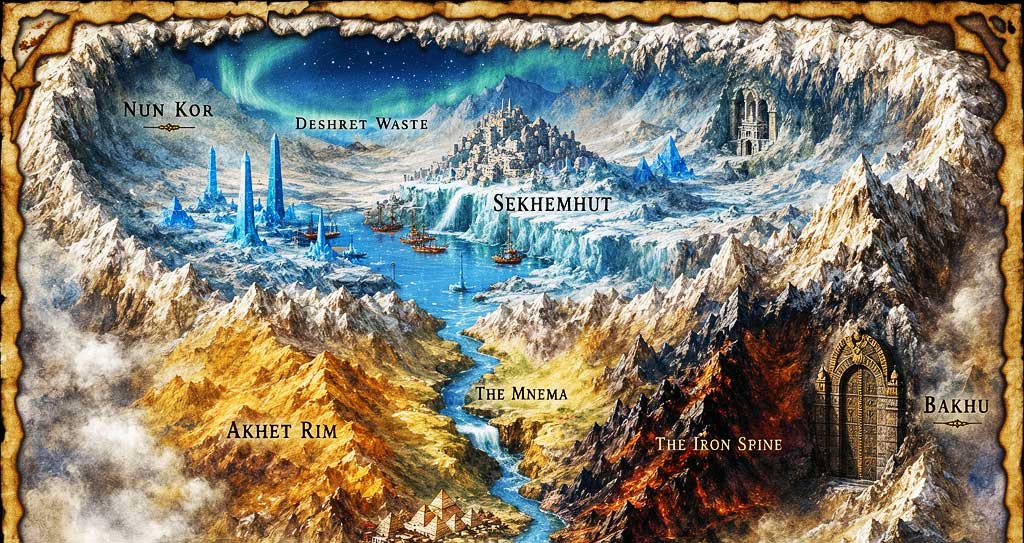
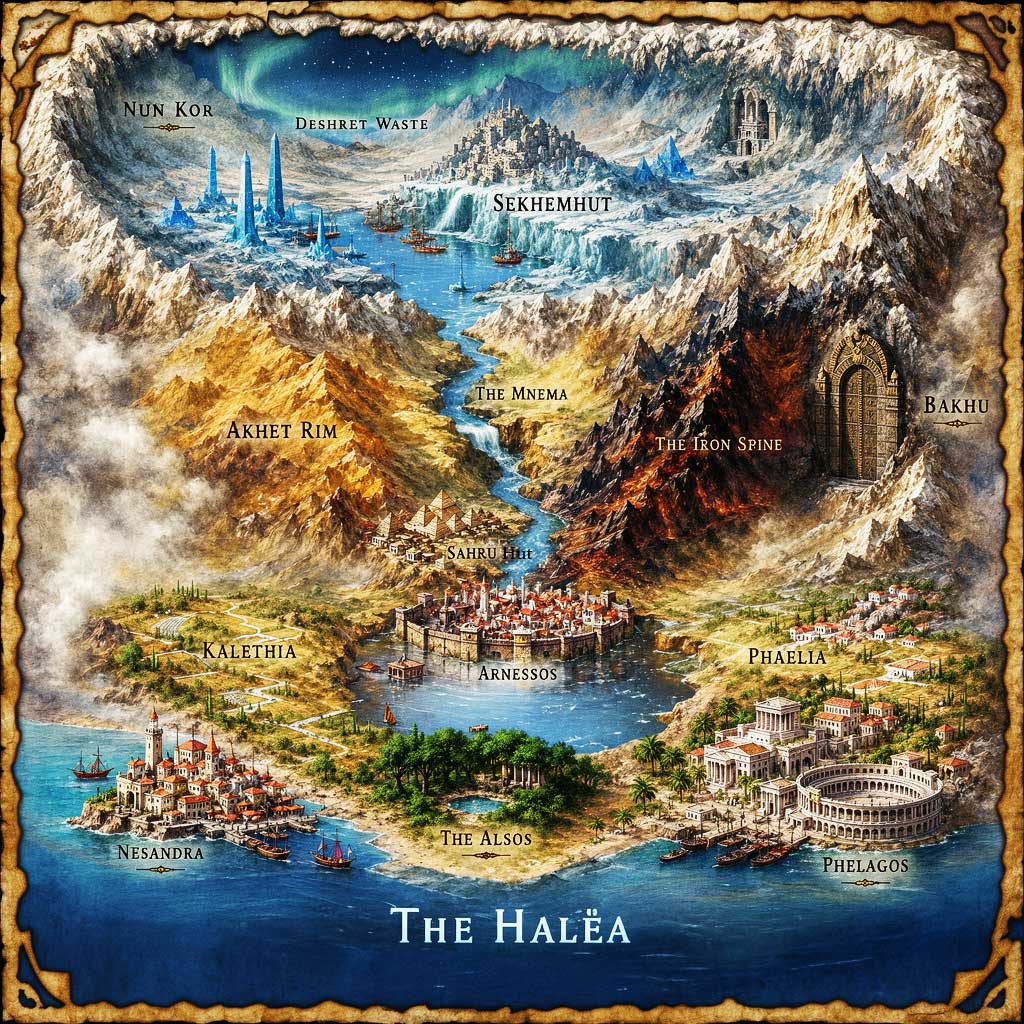
Built on the bones of Egyptian funerary tradition, carried to a conclusion Egypt itself never reached. The Hem Ka priests believe the spirit, the Ka, cannot survive the loss of its body, so they bind the dead against the thaw the way the old embalmers once bound them against rot.
By every account its people give, it is an act of love. It is also a city where the dead press their hands against the inside of the glass, because some part of them is still trying to leave.
Burning natron oil
The Iteru
The aurora as approval
South
Letheion
The white sea: forgetting as mercy
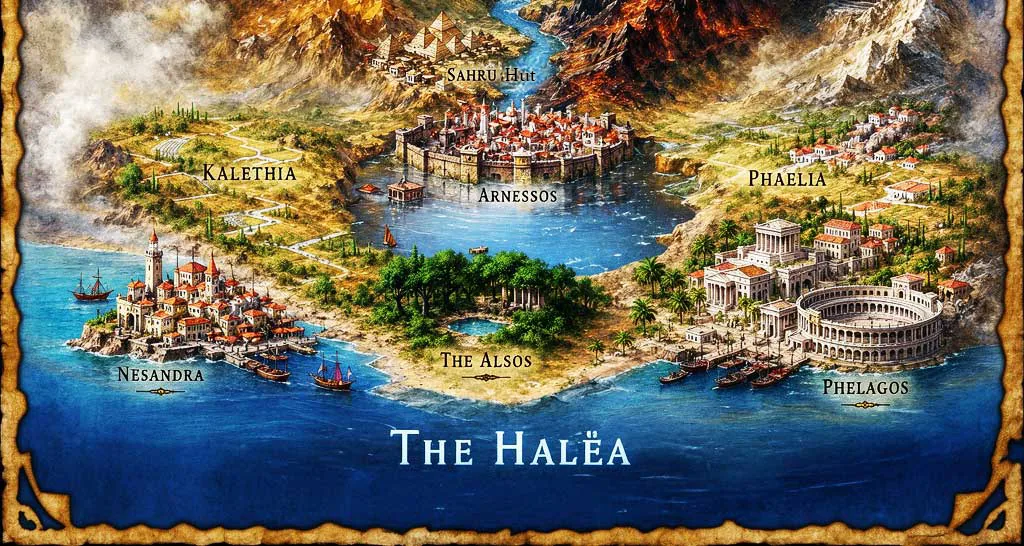
Letheion took the opposite road. White stone weathers in a warm sea wind, and the hierophants administer a drug called Nepenthe, along with the pale fruit of the Lotos, to spare the living from grief heavy enough to break them.
A people who believe forgetting is mercy. They are not wrong that grief can be unbearable. They have simply chosen not to bear it.
The Lethe spring
The Lotos
Olive groves